Garden Waste Clearance in London

Garden waste clearance in London should be straightforward, tidy and suited to the material you need removed. We collect and clear garden waste of the kind that builds up after regular maintenance, seasonal work or a bigger outdoor tidy-up, with a practical service focused on loading, removal and responsible disposal. If you are looking to free up outdoor space without handling bags and awkward cuttings yourself, our garden clearance service is designed to make that process simpler.
Typical garden waste can include grass cuttings, hedge trimmings, branches, prunings, leaves, soil in smaller quantities, old plant material and mixed green waste from beds or borders. We also deal with related items often found during garden tidying, such as broken planters, damaged fencing offcuts, timber pieces and general outdoor rubbish where it is suitable for clearance. Where items can be separated for recycling, we do so in line with the waste stream available.
For a clear quote, it helps to describe what needs removing and how it is stored. You can mention the amount, access to the garden, whether the waste is bagged or loose, and whether the job involves a front garden, rear garden, alley or shared passage. Simple details up front make it easier to understand the work and provide a sensible estimate. If you prefer, begin with a short message and build from there.
What we remove from gardens
Garden waste rarely arrives in one neat category, so the service needs to handle different materials with care. Some loads are almost entirely green waste, while others mix soil, light rubble, old pots or small timber offcuts. We can remove the sort of waste produced by pruning, cutting back, clearing flower beds or lifting overgrown sections, and we work in a way that keeps the remaining garden usable rather than disturbed.
In practical terms, that means we can help with bags of green waste, loose branches, hedge cuttings, ivy, uprooted plants and general garden debris. Where there are heavier or more awkward items, these are assessed alongside the lighter waste so the collection is planned sensibly. If your garden clear-out includes items beyond green waste, it is better to list them clearly so the quotation reflects the actual load rather than an average guess.
We also support customers who want the outdoor area prepared for gardening, sale or simple maintenance. That may involve clearing waste from paths, patios, side returns and storage corners as well as the main beds. A straightforward collection is often the best option when you want the material gone without arranging a separate vehicle or spending time making repeated trips to a disposal site.
Mixed garden loads and seasonal clearances
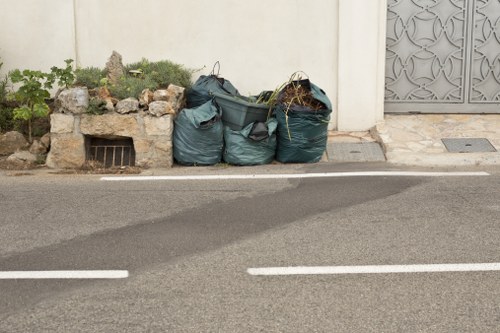
At certain times of year, garden waste becomes more varied. After trimming back growth in late summer or autumn, the load may include thicker branches, wetter cuttings and a higher volume of leaves. In spring, customers often want the remains of winter growth, dead plants and broken garden materials removed together. Mixed loads like these are common, and a useful clearance service should be able to handle them without turning every category into a separate job.
We treat each clearance on its own merits, with the aim of removing what has accumulated and leaving the space ready for your next stage of work. That can include one-off clearances after a long period of neglect, regular tidy-ups that generate only a modest amount of waste, or a more involved outdoor clean-up after changes to planting or landscaping. The emphasis is on the waste itself rather than on changing the garden design.
If you are comparing options, it is worth thinking about the end result you need. Some customers only want loose waste taken away. Others need help with heavier garden refuse that is difficult to lift into sacks or wheel through the property. Being clear about the mix allows the collection to be organised efficiently and avoids confusion when the team arrives.
How garden clearance is organised
Garden waste clearance works best when the collection points are easy to identify and the waste is grouped in a sensible way. If bags, bundles and loose material are spread across several corners, the work takes longer to assess than a single pile near access. For that reason, many customers choose to gather waste in one or two places before the collection, while keeping paths and gates clear enough for safe loading.
The most useful information for a quotation is usually the type of waste, approximate quantity and the access conditions. If there are narrow gates, steps, a long walk from the road or parking limits, those details matter because they affect the practical side of removal. For larger or heavier garden loads, it also helps to know whether any items need to be broken down before lifting. You do not need to over-explain; just give enough to describe the job accurately.
Our focus is on a tidy, efficient removal with sensible handling of the materials once they are collected. That means you can treat the service as a practical part of your garden maintenance rather than a separate project to manage. If you are ready to move forward, send a brief description and ask for a quotation.
Other clearance services we provide
Alongside garden waste clearance, we also handle a broad range of household and property clearance work. These related services matter because many customers have more than one type of unwanted material at the same time, and it is often simpler to organise one collection than several. Depending on the job, that can include general waste removal, bulky item collection, furniture clearance and clearances for storage areas or whole rooms.
For example, if outdoor tidy-up work is happening at the same time as a larger declutter, you may find the pages on rubbish clearance, bulky waste collection and furniture clearance useful. They describe closely related collection work for different types of unwanted items, and they help customers separate general rubbish from larger household pieces or mixed clearance loads. This can make the scope of a job easier to define.
If you are dealing with a garage, loft or full property clean-out as well as garden waste, it may also be worth looking at garage clearance, loft clearance and property clearance. Those pages cover clearance work where the materials are spread through an indoor space or across several areas rather than being confined to the garden alone. Choosing the right service page helps keep the enquiry focused and the quote more accurate.
Garden rubbish, bulky items and disposal options

Garden clearance is sometimes only one part of a wider waste problem. Broken chairs, damaged plant stands, weathered outdoor furniture and worn storage items can all sit alongside green waste after a long period of use. When that happens, the key decision is whether the job is mainly garden waste removal or a mixed household clearance with some outdoor material included. The answer affects how the load is planned and how it is described for pricing.
Some customers need help with a single awkward item, while others have a larger pile of mixed rubbish. If the collection includes items such as a broken sofa from a conservatory or a mattress stored in a shed, related pages like sofa removal and mattress disposal may be relevant alongside the garden work. These pages are best used when the material is genuinely part of the load, rather than added as an afterthought.
Disposal is not simply about taking waste away. It is also about separating what can be handled responsibly from what needs ordinary disposal routes. Garden waste often lends itself to recycling or composting pathways, while mixed loads may include materials that need different treatment. A careful service keeps that distinction in view so the customer’s unwanted items are handled appropriately from collection through to final processing.
Preparing for collection and getting a quote
To prepare for a quotation, it is useful to think in terms of material, quantity and access. Material covers whether the load is mostly green waste, woody cuttings, soil or mixed rubbish. Quantity helps estimate the vehicle space and labour involved. Access covers how far the waste is from the collection point, whether parking is nearby and whether the items are easy to carry. These are the practical details that make a quote more reliable.
If you already have bags ready, say how many there are and whether they are standard garden sacks or larger containers. If the waste is still loose, a rough description of the size of the pile is enough. Photographs can be helpful, but they are not the only way to explain the job. The aim is simply to make the enquiry clear enough that the collection can be priced with confidence and scheduled without unnecessary back-and-forth.
When you are ready, ask for a quotation in plain language and include any points that affect lifting or loading. Keep it brief, but specific. If the waste includes heavy bags, wet soil or thorny cuttings, mention that too. The more accurately the job is described, the easier it is to match the right removal approach to the work.
Pricing factors for garden waste clearance
Pricing for garden waste clearance usually depends on the amount removed, the type of material and the ease of access. A small pile of light cuttings is a very different job from a heavy mixed load of branches, soil and general outdoor rubbish. The quote may also vary where loading is slow because of distance, stairs, restricted access or a need to sort material before it can be taken away. Clear details reduce the chance of surprises.
It also helps to recognise that some garden waste is bulkier than it first appears. Branches and hedge trimmings can occupy more vehicle space than expected, while damp leaves and soil can add weight quickly. If the waste includes items that require extra handling, those factors should be mentioned early. We do not add unsupported claims about fixed pricing or instant availability; instead, the service is best approached as a practical estimate based on the actual load.
If you are weighing up options, compare the simplicity of a collected load with the time and effort needed to move the waste yourself. That comparison often clarifies whether you need a one-off clearance or a broader rubbish removal visit. When in doubt, the easiest next step is to request a quotation and describe the load as plainly as you can.
About London

London is a large and historically layered city on the River Thames, shaped by more than two millennia of change. Its origins lie in the Roman settlement of Londinium, founded in the first century AD, and traces of later periods remain in the street pattern, civic institutions and architectural range seen across the capital. The City of London retains its distinctive medieval and financial identity, while the wider metropolis has expanded outward through centuries of suburban growth, transport development and redevelopment. The result is a city made up of many recognisable districts, each with its own character, from the ceremonial spaces of Westminster to riverside quarters, market streets and residential neighbourhoods that have evolved at different speeds.
The Thames remains central to London’s geography and identity, linking bridges, embankments and former docklands as it winds through the heart of the city. Historic buildings stand beside modern towers, and major landmarks such as the Houses of Parliament, St Paul’s Cathedral, the Tower of London and the South Bank help define the skyline and the public memory of the place. Parks also play a major role in the city’s everyday life, with large green spaces including Hyde Park, Regent’s Park, Hampstead Heath and Richmond Park offering room for recreation, walking and wildlife. Museums, theatres, galleries and concert venues add to the cultural density, while local high streets, markets and neighbourhood centres give the capital its more ordinary rhythms.
Transport has long shaped how London functions. The Underground, rail networks, buses and river services connect districts that are often busy, mixed and close together, yet very different in feel. This complexity is part of London’s appeal: the city contains civic formality, commerce, housing estates, post-industrial sites, university quarters and village-like enclaves within one broad urban region. Its architecture ranges from surviving fragments of earlier centuries to Victorian terraces, interwar estates and contemporary redevelopment, making the capital a place where historical layers remain visible in daily movement. That blend of old and new gives London a distinctive character that continues to evolve.
Household clearances and heavier items
Some garden projects uncover more than green waste. A shed, garage or outbuilding may contain broken household items, old storage boxes, worn tools or redundant furniture that need removing at the same time. When this happens, it is often easier to treat the work as a mixed clearance rather than separate each category into a different visit. That approach can be especially useful when access is limited and you want the whole area cleared in one go.
Related services such as house clearance, flat clearance and home clearance are relevant where the job extends beyond the garden and into the property itself. They cover indoor clearance work that may overlap with outdoor tidying when a customer is preparing to move, reorganise or remove accumulated belongings. Choosing the correct service helps define whether the work is mainly garden waste, household contents or a combination of both.
For heavier single items, particularly where lifting and disposal need separate planning, pages such as large item collection and white goods recycle may also be useful. These pages are intended for substantial pieces rather than loose garden debris. The point is not to fragment the work unnecessarily, but to make sure each type of item is described accurately so the collection can be arranged in a sensible way.
Recycling, reuse and responsible disposal

Responsible garden waste clearance is not only about removing the visible mess. It also involves thinking carefully about what happens after collection. Green waste, woody material and certain other garden by-products may be suitable for recycling or recovery routes, while mixed rubbish may need sorting before disposal. A well-run service keeps these differences in mind and avoids treating every item as if it belonged to the same waste stream.
That matters because outdoor clearances often contain several material types together. A branch pile may sit beside old compost bags, cracked pots, metal fixings or broken decking offcuts. Each of these materials may need a different final route, and sensible sorting helps support that. If sustainability is important to you, it is reasonable to ask how the waste will be handled. The best approach is usually to provide an accurate description of the load and let the collection be planned around it.
For customers who want to look at the broader approach to disposal and materials handling, recycling and sustainability and waste disposal are useful supporting pages. They sit alongside the clearance work itself and help explain how collected waste is managed beyond the initial pickup. If you have garden waste ready to go, or a mixed outdoor load that needs clearing, ask for a quote today and give a brief outline of the items involved.