Clearance Rubbish: Recycling & Sustainability
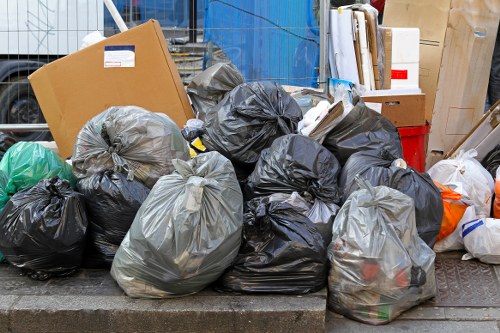 At Clearance Rubbish we believe that responsible waste removal goes hand in hand with long-term environmental care. Our clearance rubbish services prioritise reuse and recycling at every step, and our team works to keep materials out of landfill wherever possible. We combine practical local knowledge with measurable targets and community partnerships to make rubbish clearance better for neighbourhoods, public spaces and small businesses. By measuring outcomes and refining processes we make the waste clearance journey simple for customers while delivering demonstrable environmental gains.
Many of the boroughs we serve have progressive approaches to waste separation: separate food waste, glass, paper and garden waste collections are common, and several councils run specific bulky-item schemes. Our crews know local kerbside rules and adapt on-site sorting to match each borough’s expectations. That means fewer loads rejected at council transfer points and more material recovered for recycling. We also use pre-sort checklists to ensure timber, metal and electricals are separated during clearance so they enter the correct recycling stream.
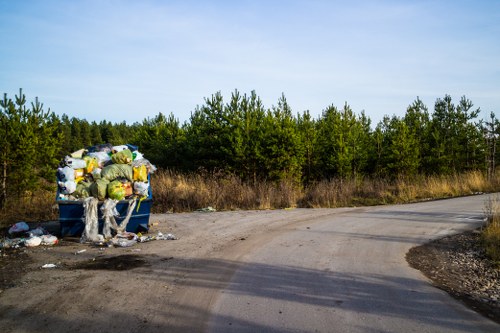 Our recycling percentage target is ambitious and clear: we aim to recycle or repurpose at least 90% of all items we collect by 2028. This target covers direct recycling, refurbishment, donation and material recovery processes that divert items from landfill. To reach it we track material flows from collection to final processing, measure reuse rates with partner organisations and continuously improve how our rubbish clearance and waste clearance teams operate. Monthly data reviews help us identify bottlenecks, increase capture rates and accelerate progress towards our sustainability goal.
Local Transfer Stations and Efficient Routing
We rely on a network of local transfer stations and material recovery facilities to keep transport miles low and processing rapid. Consolidating loads near collection areas reduces double handling and helps maintain high recycling yields. By routing collected items to the most appropriate local facility — whether that is a municipal transfer station, a specialist wood recycler or an electronics processor — we make sure that the maximum possible material is recovered.
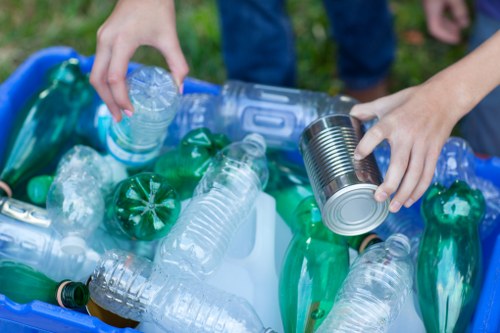 Working closely with transfer stations allows our teams to divert hard-to-recycle items such as mixed timber, soft furnishings and WEEE to specialist processors. Our staff are trained to apply the boroughs’ separation requirements on-site and to label items for reuse or specialist treatment. In practice this means fewer bulky items end up in residual waste, and more are recycled, recovered or repaired locally.
We also maintain clear, straightforward material handling protocols that support local recycling activity. Typical streams we prioritise include:
- Electronics: secure data wiping, safe depollution and E-waste recycling channels
- Wood & furniture: repair, donation or chipping for energy recovery when refurbishment isn’t viable
- Textiles: sorting for reuse, repair or fabric recycling to local textile processors
Partnerships, Donations and Low-Carbon Fleet
Partnerships with local charities, social enterprises and reuse centres are central to how we deliver social and environmental value. Rather than treating usable goods as waste, our teams separate items suitable for donation and coordinate deliveries to community organisations that redistribute furniture, appliances and clothing to households in need. This approach not only raises reuse rates but also supports local services and reduces demand for new products.
 Our collaboration model includes scheduled drop-offs to community reuse stores and long-term relationships with social enterprises that refurbish and resell items. By sharing anonymised statistics on donations, refurbishment rates and items prevented from landfill, we maintain transparency about progress toward our recycling percentage target. These partnerships turn routine clearance jobs into meaningful contributions to the local circular economy.
 To reduce emissions from our operations we operate a modern, low-carbon fleet of vans comprising electric and hybrid vehicles selected for urban efficiency. Route optimisation software, real‑time telematics and driver training reduce empty miles and idling time, lowering fuel consumption and tailpipe emissions. Our goal is to phase more electric vehicles across our clearance fleet and continually refine collections to shrink our operational carbon footprint while maintaining reliable, professional rubbish removal services.
Clearance Rubbish is committed to continuous improvement: we review our recycling targets, maintain active conversations with borough recycling coordinators and expand partnerships with community groups. Whether it’s a domestic clearance, a shop refit or a light commercial waste collection, our focus remains on diverting materials from landfill, supporting reuse and operating as sustainably as possible.
By working with local transfer stations, building long-term charity partnerships and using low-carbon vans, our rubbish clearance and clearance rubbish teams aim to deliver measurable environmental benefits while supporting the communities we serve. We publish progress internally and seek opportunities to raise our recycling percentage year on year, with the clear objective of helping build a more circular, low-carbon future for every area we operate in.